
Immagine

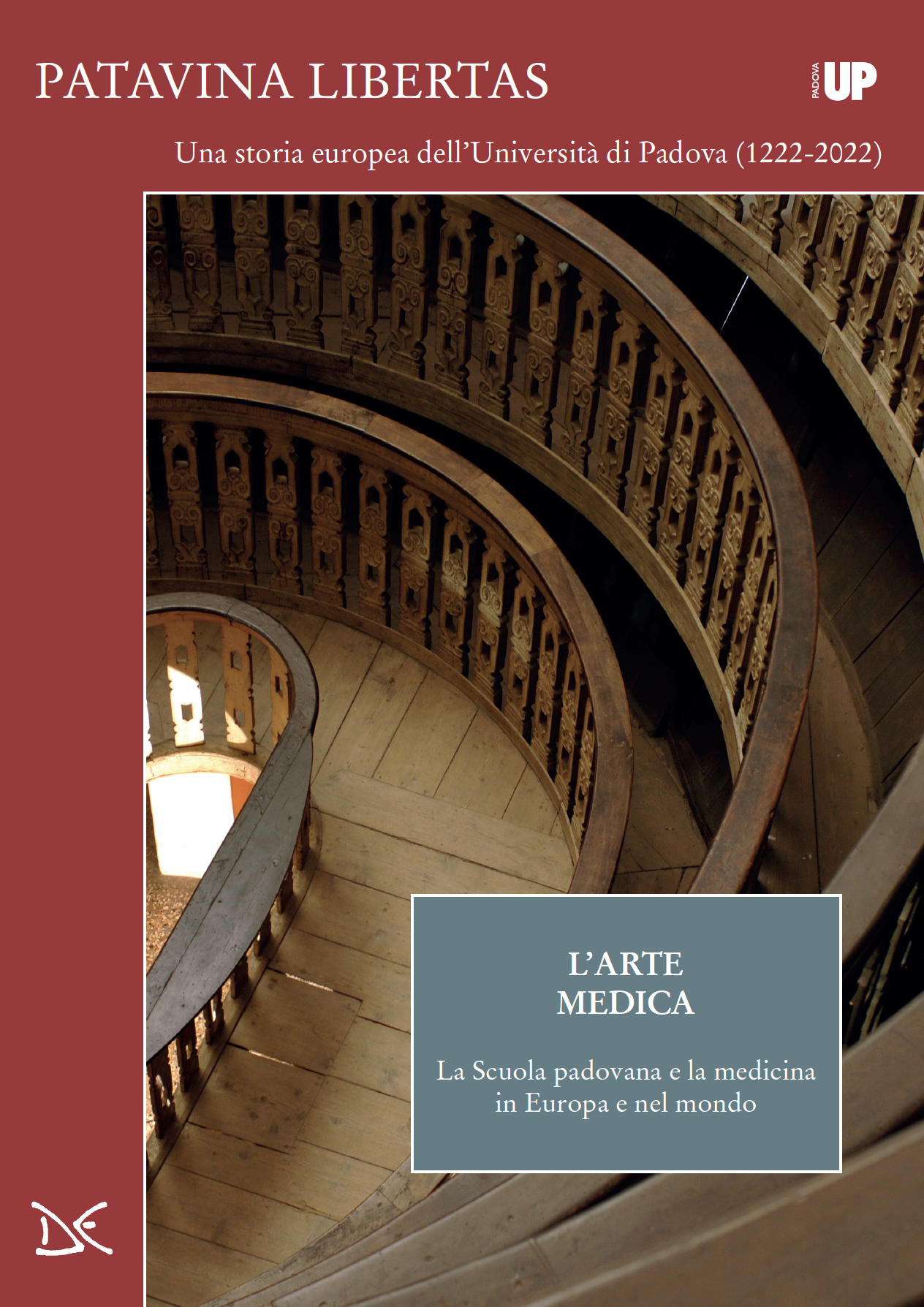
L’ARTE MEDICA
La Scuola padovana e la medicina in Europa e nel mondo
Il volume ricostruisce una vicenda lunga più di un millennio, se si considera l’origine remota, orientale, della medicina occidentale
Year
2022
Pages
423
ISBN
978-88-5522-310-2
Book subjects
DOI
10.20371/pupb-2022-9788855223102
The volume retraces a history spanning more than a millennium, if we consider the remote, Eastern origins of Western medicine. This body of knowledge eventually reached the Studium of medieval Padua, where it took deep root and flourished. The Paduan School of Medicine has been in the past, and continues to be today, a crucible of excellence. On the occasion of the University's octocentenary, which was celebrated in 2022, this volume honors the art of medicine in Padua from its distant origins to the present day. Across these dense pages, the fruit of an extraordinary work of synthesis, it is possible to trace the entire arc of the development and progress of medical knowledge.
Predominantly political circumstances favored its growth, which was able to thrive thanks to the presence of professors and students determined, respectively, to teach and to learn. An extraordinary group of teachers made the history of medicine in Padua, destined to spread toward both East and West. Just as the milestones achieved by Paduan anatomy knew no boundaries, so too did other disciplines—such as physiology, pathology, and clinical practice—suffer no barriers of any kind.
Medical and scientific knowledge, which formed and still represents the intangible heritage of the Paduan Medical School, took shape through processes of cross-pollination, of encounters and clashes with the knowledge of other traditions and universities. The history of Paduan medicine echoes that of tolerance and freedom of thought, precious ingredients of social progress. Although, following the fall of the Republic of Venice in 1797, the School had to submit to foreign dominations before becoming Italian, it nonetheless remained constantly connected with the vibrant scientific community of the 19th and 20th centuries. The acquisitions rapidly developing across Berlin, Paris, London, and newer non-European medical schools soon made their way into the San Francesco Hospital and university lecture halls. In these pages, the reader will discover the history of a composite universe, made up of things and people united by brilliance and care for the sick. When the art of medicine fails to prevent illness, it seeks to cure or alleviate it.